

Never miss an update. Join our newsletter.
You're in.Look for the next issue in your inbox.
11611 San Vicente Blvd. #650
Los Angeles, CA 90049
© 2026 Bonfire Ventures. All rights reserved.
September 29, 2026
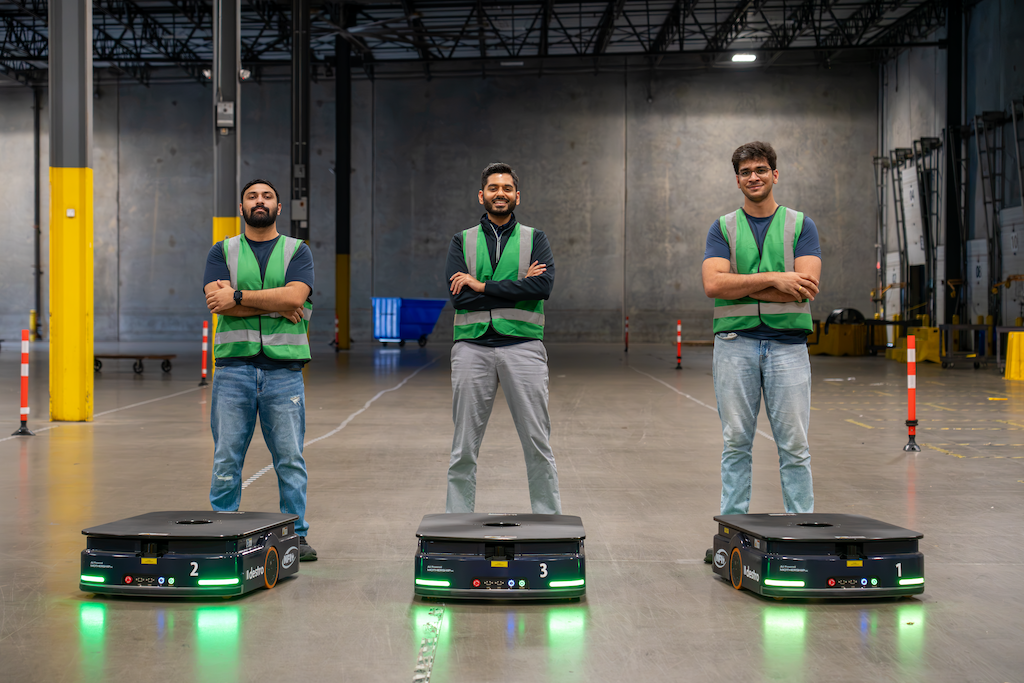

For years, the conversation around warehouse automation centered on the robot: robotic arms, autonomous vehicles, and now humanoids. But after spending years in logistics and supply chain operations, I've learned that the hard part is actually everything around the robot.
Warehouses are living systems: inventory moves, priorities shift, trucks show up late and labor availability changes by the hour. The challenge isn't getting a robot to move from point A to point B—it's helping that robot understand how to make complex decisions in real time.
That's exactly what Destro AI is building. Destro's platform, MothershipOS, acts as an intelligence layer for warehouses, giving robots the context they need to operate alongside people, inventory, and existing workflows.
As physical AI moves from flashy demos into real-world deployments, we believe this operating system will become one of the most important pieces of the stack.
One of the things that drew us to Destro was how clearly its Co-founder & CEO, Manthan Pawar, understood his customer and the operational pain points they face.
Warehouse operators don't wake up thinking about robots. They wake up thinking about throughput, labor shortages, service levels, and getting orders out the door.
To date, most automation solutions still operate as isolated point products. A robot can perform a task exceptionally well, but it often lacks awareness of what's happening across the broader operation. Destro flips that model on its head.
MothershipOS digitizes warehouse workflows, ingests signals from people and machines, and helps autonomous systems make decisions within the context of the entire operation.
Instead of optimizing a single robot, Destro is optimizing the warehouse.
The future won't be one robot doing one task. It will be fleets of robots, people, and software working together in real time.
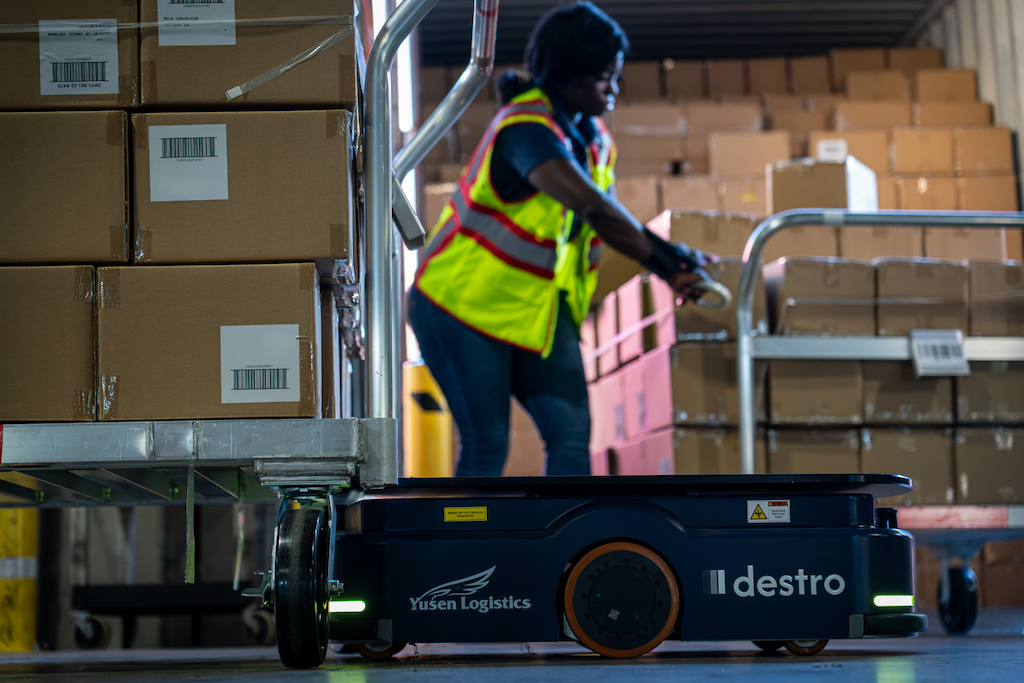
The timing couldn't be better.
Just a few years ago, building a company like Destro would have required solving both the robotics problem and the software problem simultaneously. Today, robotics hardware has matured dramatically. Autonomous mobile robots are increasingly reliable, accessible, and deployable.
At the same time, advances in AI have unlocked entirely new ways to process operational data, understand changing environments, and coordinate decisions across complex systems. The result is a massive opportunity.
As AI moves beyond screens and into the physical world, we believe warehouses represent one of the largest opportunities for intelligent automation. The infrastructure is ready, the economics are compelling and the need has never been greater.
Great markets matter. Great founders matter more.
From our first conversations, it was clear that Manthan has spent years living this problem.
Before founding Destro, Manthan held leadership roles across warehouse robotics companies including HAI Robotics, Dexterity, and Levata. He understands the technology, but just as importantly, he understands how to speak to customers about how automation actually gets deployed inside their environments.
Throughout our diligence, we consistently heard the same thing: customers trusted him, understood the value proposition, and wanted the product.
He is joined by co-founder Soorya Narayanan, whose expertise in human-robot collaboration is foundational to Destro's vision.
Together, they bring the technical depth, operational experience, and customer empathy required to build a category-defining company.
We invested in Destro because we believe the next wave of AI will be physical.
The winners won't simply be the companies building robots. They'll be the companies that make robots useful inside real-world operations.
We've spent enough time around warehouses and logistics networks to know that operational complexity is where good ideas go to die. What impressed us about Destro is that it's built for the messy reality of deployment, not the controlled environment of a demo.
Making robots intelligent is only part of the challenge. Making them useful in the real world is where the opportunity lies—and that's the future we're excited to back.