

Never miss an update. Join our newsletter.
You're in.Look for the next issue in your inbox.
11611 San Vicente Blvd. #650
Los Angeles, CA 90049
© 2026 Bonfire Ventures. All rights reserved.
December 19, 2025


Raising a seed round is a big deal. You've proven people actually want what you're building, and now you need the capital to hire your first key teammates and figure out a repeatable go-to-market motion that actually works.
A lot of first-time founders assume they need a pedigree or a past exit to raise at this stage. But as Bonfire Ventures co-founder Mark Mullen puts it: “We invest in founders who claw their way to the starting line, not the ones with perfect resumes. We assess their grit, how they handle pressure, and their operating skills.”
The top VC investors leading seed rounds aren’t making decisions based on a pitch deck alone. They review investment criteria,early product usage, real customer conversations, and whether buyers are actually opening their wallets.
At Bonfire Ventures, we lead seed rounds for AI-native B2B software founders and know firsthand what strong early traction looks like and what founders need to turn that traction into a scalable operating plan.
This guide highlights investors who stay close to founders and provide the structure needed to reach Series A and beyond.
When a VC “leads” your seed round, it means they write the largest check and take responsibility for getting the round across the finish line. They set the terms, approve the valuation, and bring the rest of the investors together so you’re not chasing checks one by one.
A lead investor is your main partner after the raise. They help you decide which customers to focus on first, how to price, and which early hires drive the biggest impact. When something breaks, as things tend to do in the early days, they’re the person you call to talk through the problem.
Seed investors sit at a unique moment in a company’s life. They’re early enough to shape the foundation, but at this stage they’re also able to see the first real signals. The right partner helps you analyze early wins and turn those findings into a clear plan for growth. You’ll review customer feedback together, tighten your pitch deck, and build simple ways to track what’s working.
A strong seed investor also keeps you from wasting cycles. They’ve seen where early-stage teams get stuck, like hiring too fast, pricing too low, or chasing the wrong customers. They use this experience to help you avoid those common traps. Their goal is to build enough repeatability so that your Series A is the next natural step.
Great seed investors stay close to the day-to-day work, like talking to customers, refining messaging, improving the product, and helping you prioritize the handful of decisions that move the company forward.
We’ve led hundreds of seed rounds for B2B software founders, so we know what real conviction looks like at this stage. Here’s a look at some of the top VCs leading seed rounds and partnering closely with founders from day one.

Bonfire Ventures is a seed-stage venture firm with a singular focus on AI-native B2B software. With more than $18 billion in exit value and over two decades investing in business technology, Bonfire brings hard-earned pattern recognition from prior platform shifts. By design, the firm invests in just 10 to 12 companies each year, allowing the team to work closely with every founder from the earliest stages of company-building and beyond.
Bonfire specializes in the phase when product, pricing, and go-to-market are still evolving, and when AI is increasingly reshaping what “product” even means. The firm leads seed rounds with $2 million to $6 million checks from its $245 million fourth core fund. From there, the team helps founders turn AI, proprietary data, and sharp product judgment into a durable advantage and a stronger foundation for the next stage of growth.
Bonfire designs funds for multi-round support, reserving a significant portion of capital for follow-ons and maintaining a dedicated growth vehicle to continue backing companies through Series A, B, and beyond.
The firm’s portfolio includes breakout B2B software companies such as Boulevard, MNTN, and The Trade Desk.
Learn more about partnering with Bonfire.

Andreessen Horowitz was founded in 2009 and has grown to nearly $46 billion in assets under management. Their investment profile spans seed to growth-stage companies, giving founders access to former operators and functional specialists. As part of their early-stage work, they offer structured support including founder workshops, operating-partner office hours, and a “seed library” of best practices on hiring, product launch, and early customer traction.
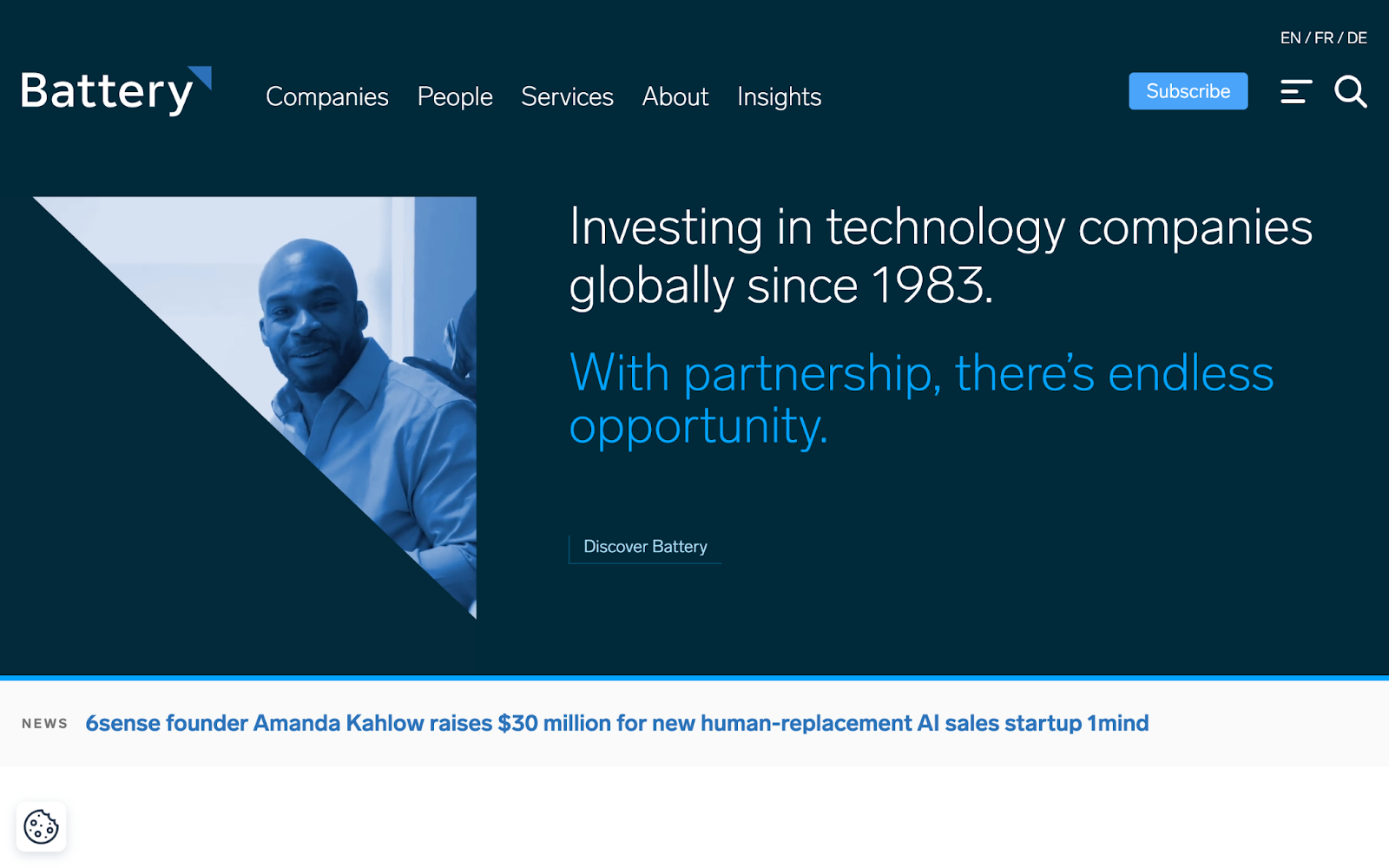
Battery Ventures has been investing in technology companies since 1983 and has backed more than 450 teams across software and industrial tech. The firm works across the U.S., Europe, and Israel, giving founders access to a broader network of operators and companies. Battery also has a dedicated group that helps portfolio teams with practical needs like hiring, marketing, and early customer development.
Benchmark is a venture firm founded in 1995 and operates with a small partnership model where all partners share equal ownership in the fund. The firm keeps its team intentionally lean, which means founders work directly with general partners rather than a layered organization. Benchmark has backed companies that later became larger enterprise and infrastructure players. The firm remains focused on early-stage investments rather than expanding into growth or late-stage capital.
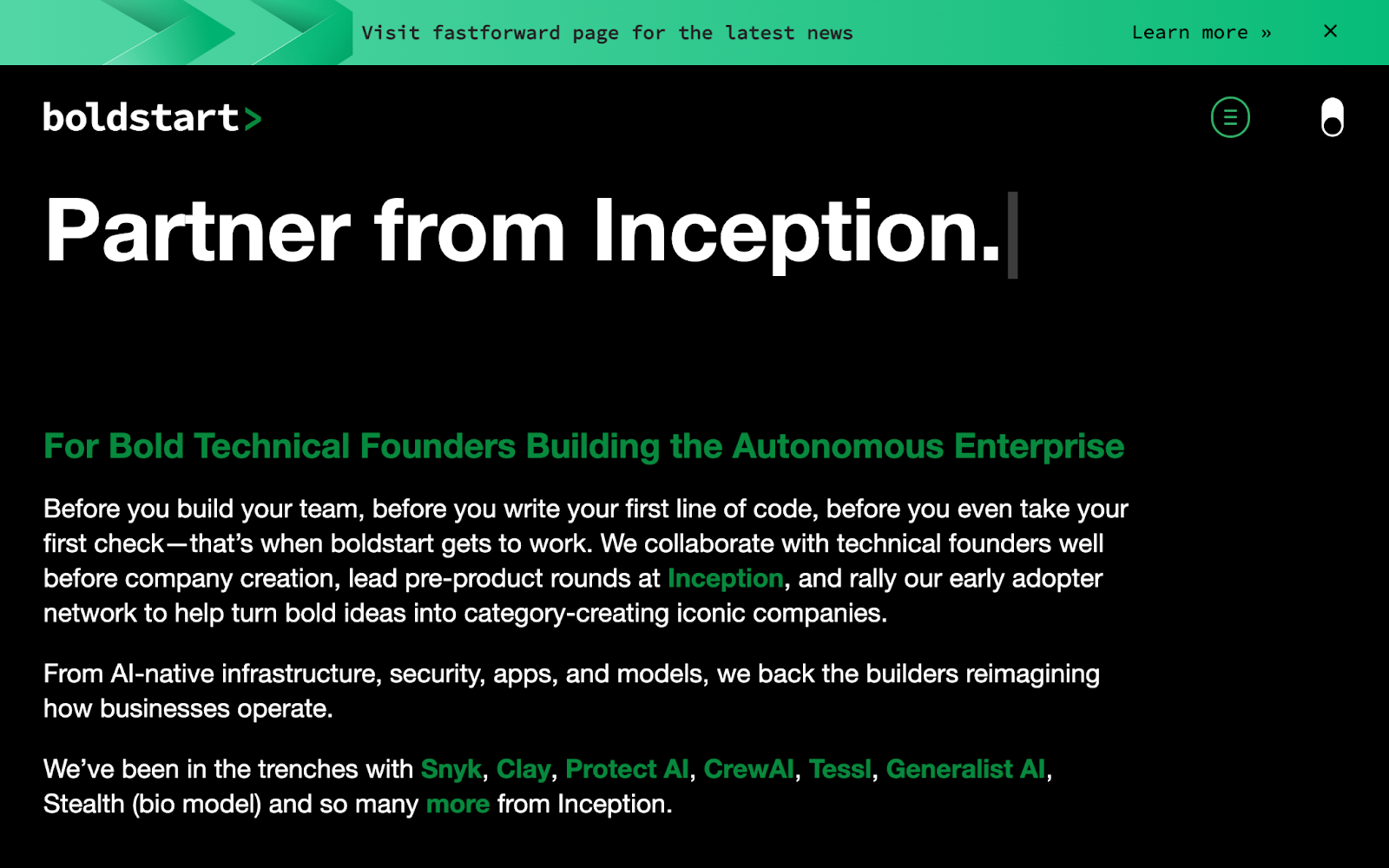
Boldstart Ventures was founded in 2010 with a focus on backing technical founders at the very beginning of their company-building process. The firm positions itself as a “first check” investor for developers and infrastructure teams, investing before a public launch or formal go-to-market motion. Boldstart maintains a portfolio and community centered on engineering-heavy products, giving founders access to peers building similar tools.
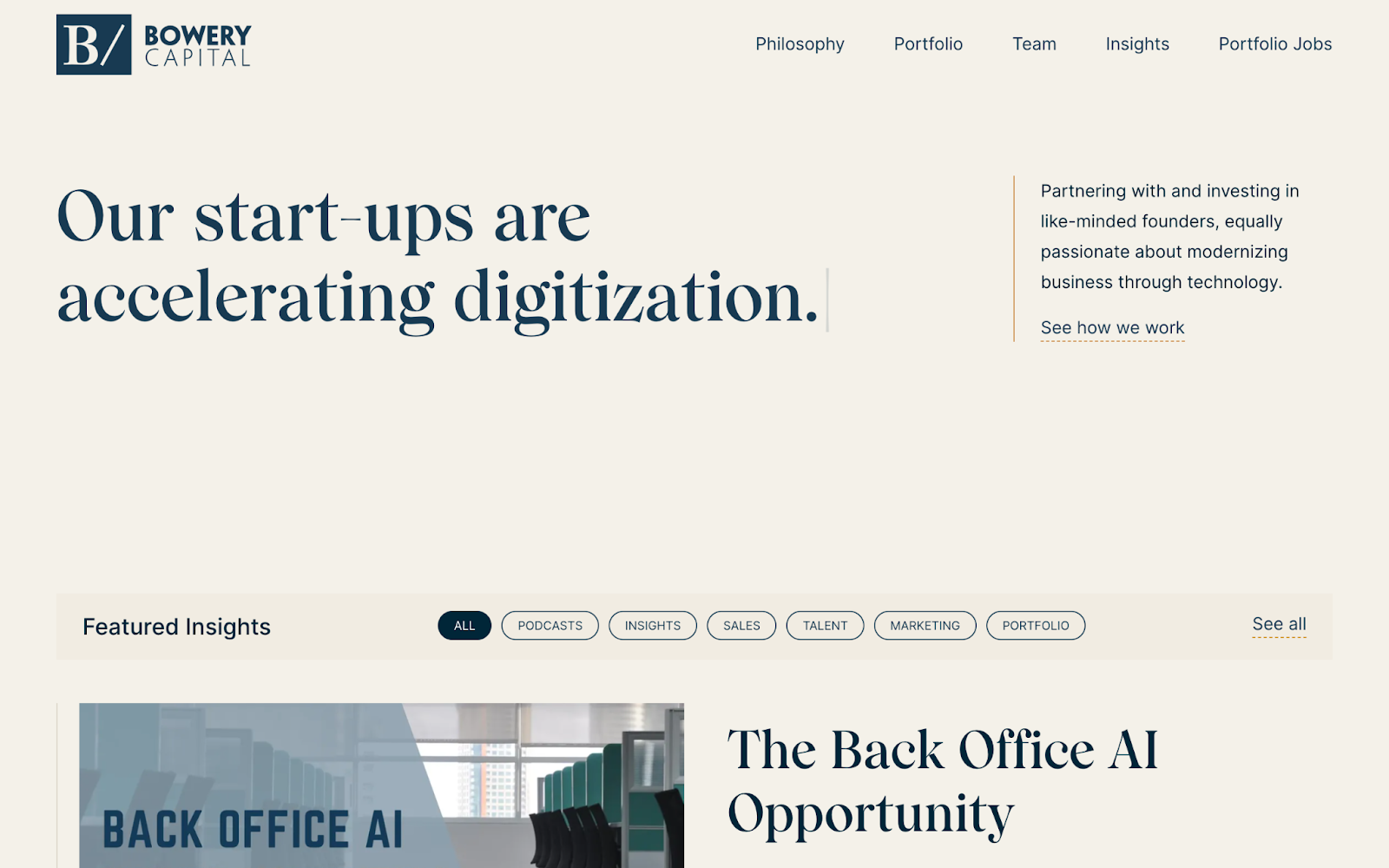
Bowery Capital was founded in 2013 with a focus on early B2B software companies building new sales and marketing approaches. The firm runs a structured “Acceleration Team” that helps portfolio companies with projects like onboarding early customers, improving sales processes, and building playbooks. Bowery also produces research and podcasts focused on enterprise software trends to give founders access to practical insights from operators and GTM leaders.
BoxGroup is a New York-based seed firm that has invested in more than 500 companies since its founding. The firm writes relatively small checks but backs a wide range of early-stage teams across software and consumer categories. BoxGroup participates actively at seed while keeping a flexible approach to follow-on funding as companies progress. Their broad portfolio gives founders exposure to a large network of peers building in similar markets.
Cowboy Ventures was founded in 2012 and invests primarily at the seed stage in software companies across the U.S. The firm focuses on practical software used by businesses and consumers. Cowboy typically writes initial checks in the $200K-$500K range, with reserves for follow-on rounds. Their portfolio includes both workplace software and technology that supports non-technical industries like education, logistics, and services.

Craft Ventures was launched in 2017 by operators with experience scaling companies like PayPal and Yammer. The firm invests at seed through Series B, with seed checks typically falling in the $1M-$3M range. Craft offers capital with a library of resources for SaaS metrics, pricing strategy, and customer retention basics. Their portfolio includes productivity software, sales tools, and developer platforms used by both startups and enterprise teams.

First Round Capital was founded in 2004 as one of the earliest firms dedicated solely to seed-stage investing. The firm writes initial checks typically ranging from $1M-$2M, backing companies before they have established go-to-market motions. First Round runs a large founder community and resource network that offers programs, events, and databases for builders. They give founders exposure to hundreds of early-stage peers working through similar early decisions.
Footwork was founded by Mike Smith and former Stitch Fix COO Mike Smith and entrepreneur Nigel Eccles. The firm invests early in consumer and commerce startups, with seed checks generally falling in the $500K-$2M range. Footwork focuses on software that supports creators, online communities, and digitally native brands. Their team gives founders access to insights from product, marketing, and scaling backgrounds.

Founder Collective began in 2009 with a first fund of $40M committed capital, and most recently closed a $95M fund in 2023. They typically write seed checks in the $200K-$1M range and tend to back companies at the earliest stages of product and customer development. Their team draws from prior entrepreneurial experience, giving them a practical lens for evaluating early traction and market entry.

Greylock Partners is a long-standing Silicon Valley venture firm founded in 1965 and managing several billion dollars in committed capital. The firm invests from seed to growth, and maintains leads in seed-stage rounds through programs like Greylock Edge, a three-month initiative for pre-seed and seed founders. Greylock focuses on companies building software for AI, cloud infrastructure, and consumer platforms. They give founders access to product leaders, engineers, and experienced operators across the tech ecosystem.
Harpoon Ventures was founded in 2018 and invests in early-stage companies building advanced technologies with both commercial and national-security applications. The firm manages several hundred million dollars across its funds and focuses on startups working in areas like autonomy, AI, cyber, advanced materials, and aerospace. Harpoon maintains a team of former defense operators and acquisition experts who help founders understand government procurement pathways.
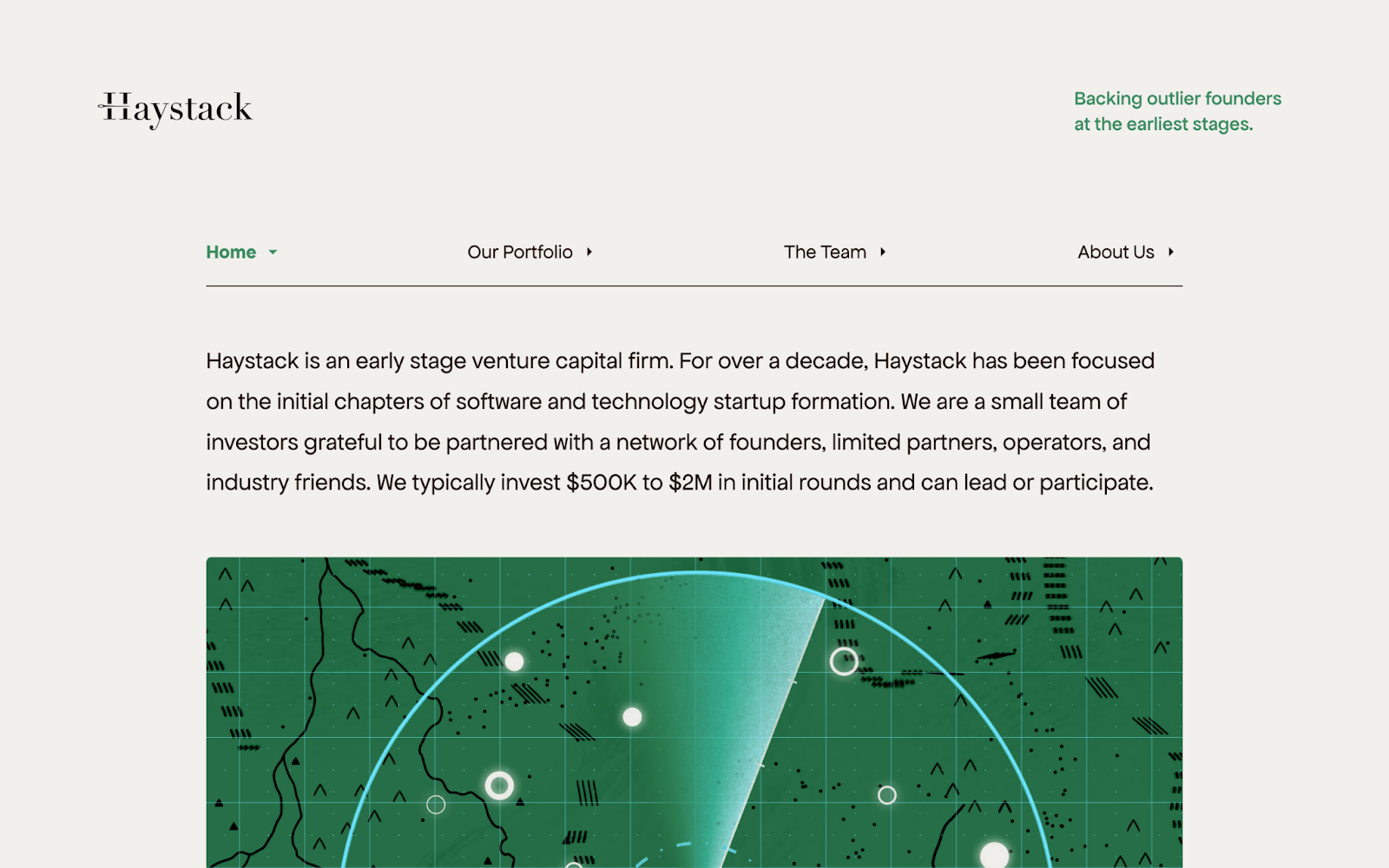
Haystack launched in 2013 and has backed more than 200 early-stage startups across software, consumer, and emerging technology categories. The firm typically writes first checks between $500K and $2M and often participates at the earliest stages of product development. They have dozens of portfolio companies rising past $100M valuations and several breaking out into unicorn-level scale.
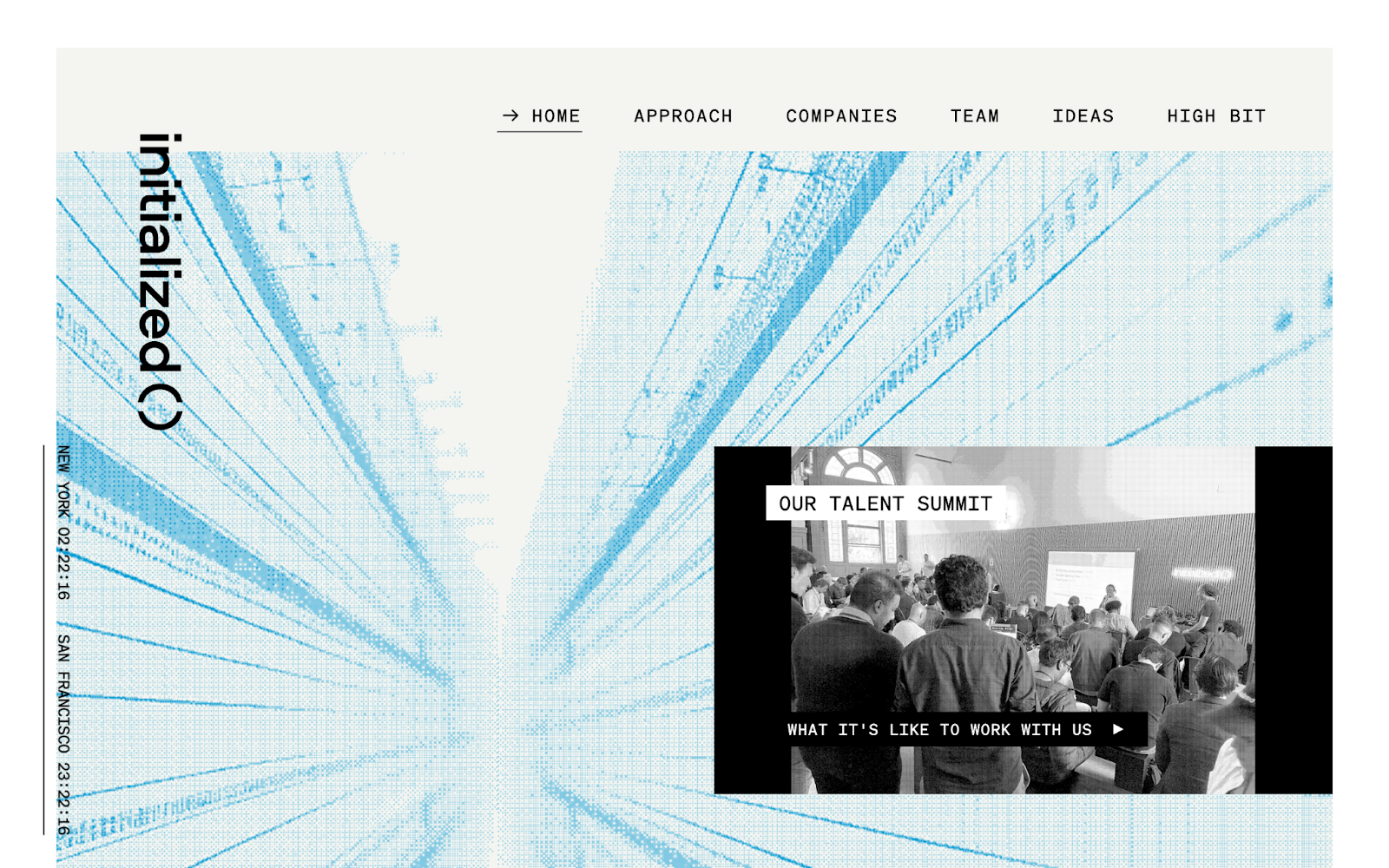
Initialized Capital was founded in 2012 and invests at the earliest stages, often before a startup has a polished product or a formal go-to-market plan. The firm manages several billion dollars across multiple funds, giving it the ability to lead seed rounds and continue supporting companies through later stages. Initialized typically writes early checks in the $500K-$1.5M range. Their portfolio includes companies that later became bigger platforms in software, commerce, and infrastructure.

Lerer Hippeau is a New York-based seed firm founded in 2010 and an active early-stage investor on the East Coast. The firm invests across SaaS, consumer, and marketplace categories, with seed checks that typically fall in the $300K-$1M range. Lerer Hippeau runs multiple seed funds alongside an opportunity fund. Their portfolio includes a mix of enterprise tools, modern retail brands, and logistics and health-tech platforms.

Lightspeed Venture Partners was founded in 2000 and manages tens of billions across global funds invested in the U.S., Europe, India, Israel, and Southeast Asia. The firm runs a broad early-stage practice that includes dedicated seed programs that allow teams to raise their first institutional capital and continue working with Lightspeed into later rounds. The firm has backed multiple companies that scaled into publicly traded software businesses.

Pear VC was founded in 2013 and focuses on being a startup’s first institutional partner. The firm runs Pear Accelerator and Pear Dorm, which support idea formation, product development, and early customer testing. Pear typically writes first checks in the $250K-$2M range and reserves capital to follow companies through later stages. They also maintain close ties to universities and technical communities, making it a common early stop for student and researcher-led startups.
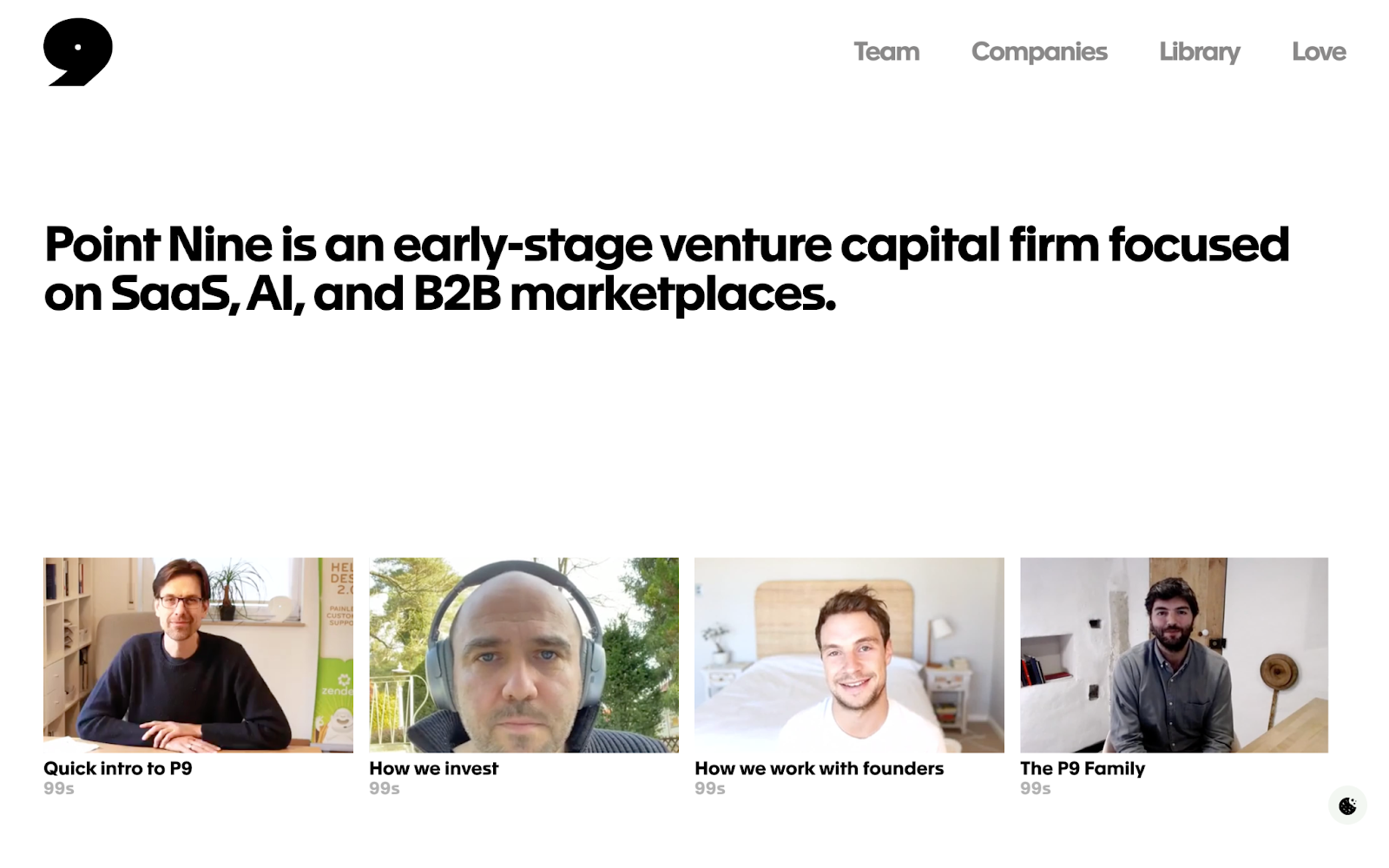
Point Nine Capital is a Berlin-based seed fund founded in 2011. They tend to invest early in SaaS and marketplace startups across Europe and North America. The firm typically writes first checks in the 500K-1M range and often leads or co-leads early rounds. The team publishes research, benchmarks, and playbooks that are widely used by SaaS founders.

Sequoia Capital was founded in 1972 and is one of the longest-running venture firms in technology that invests across the U.S., Europe, India, and Southeast Asia. The firm participates at seed through late-stage rounds, with dedicated early-stage teams that focus on helping founders validate markets and build initial traction. Sequoia makes major investments in consumer and fintech platforms.
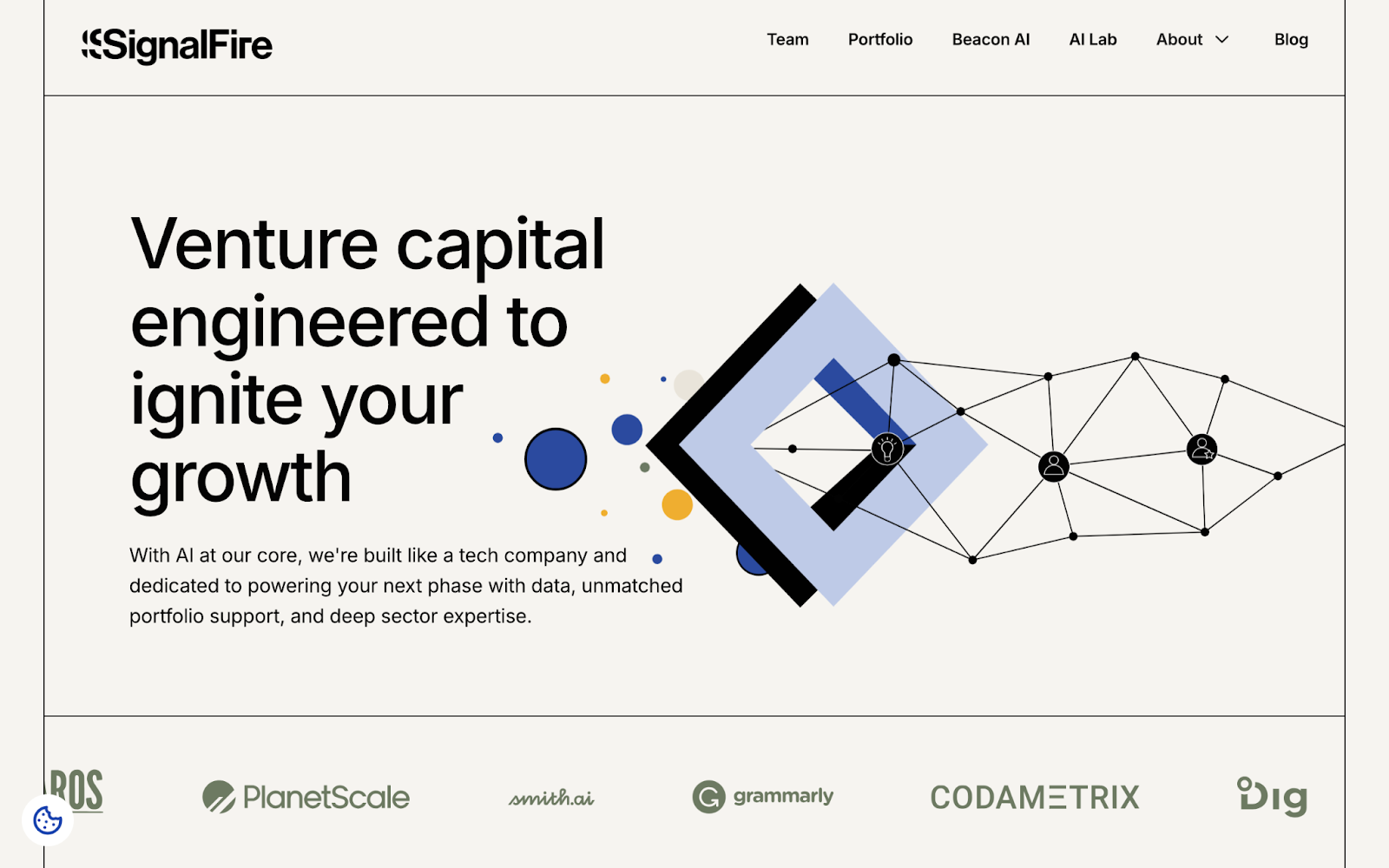
SignalFire was founded in 2013 and operates as a data-driven venture firm with a proprietary system that tracks millions of metrics across talent, market trends, and product signals. Their internal platform, Beacon, can surface emerging startups and help portfolio companies recruit technical talent through labor-market analysis. SignalFire typically writes seed checks in the $1M-$5M range and supports founders with in-house specialists in areas like hiring, go-to-market, and product strategy.
Spark Capital was founded in 2005 and invests primarily in early-stage companies across software, consumer internet, and financial technology. Spark writes initial checks that often fall between $1M-$3M, with reserves for follow-on rounds. Their portfolio includes companies that grew from seed-stage products into commonly adopted communication, payments, and marketplace tools.

Susa Ventures was founded in 2013 and invests primarily at the seed stage in companies building data-heavy or operationally complex products. The firm manages several hundred million dollars across multiple funds and typically writes initial checks in the $500K-$2M range. Susa often backs teams working on the “pipes and plumbing” of technology, which include infrastructure software, supply chain platforms, financial systems, and AI tools.
SV Angel is an early-stage firm founded by Ron Conway and later transitioned to a multi-generational partnership team. The firm invests at pre-seed and seed, writing initial checks generally in the $100K-$500K range and participating alongside lead investors. SV Angel has backed hundreds of startups across software, fintech, consumer, and developer ecosystems.
True Ventures was founded in 2005 and focuses almost entirely on pre-seed and seed investments across software, hardware, and emerging technology markets. The firm typically writes early checks in the $1M-$2M range and maintains an active seed portfolio in Silicon Valley. They run founder programs, retreats, and community events that give teams a network of peers at the same stage.
Uncork Capital, originally known as SoftTech VC, was founded in 2004 as one of the earliest funds dedicated to seed-stage software investing. The firm typically writes first checks between $500K-$1.5M, backing companies before they have mature sales or marketing operations. Uncork keeps its funds intentionally small, allowing the team to stay tightly focused on early customer validation and product development.

Unusual Ventures was founded in 2018 and is built around a hands-on early-stage model designed to help founders validate their first customers and build repeatable sales efforts. The firm runs the Unusual Academy, a structured program that gives founders guidance on GTM planning, customer development, and early sales execution. Unusual typically writes seed checks in the $1M-$3M range and stays focused on enterprise and technical software markets.
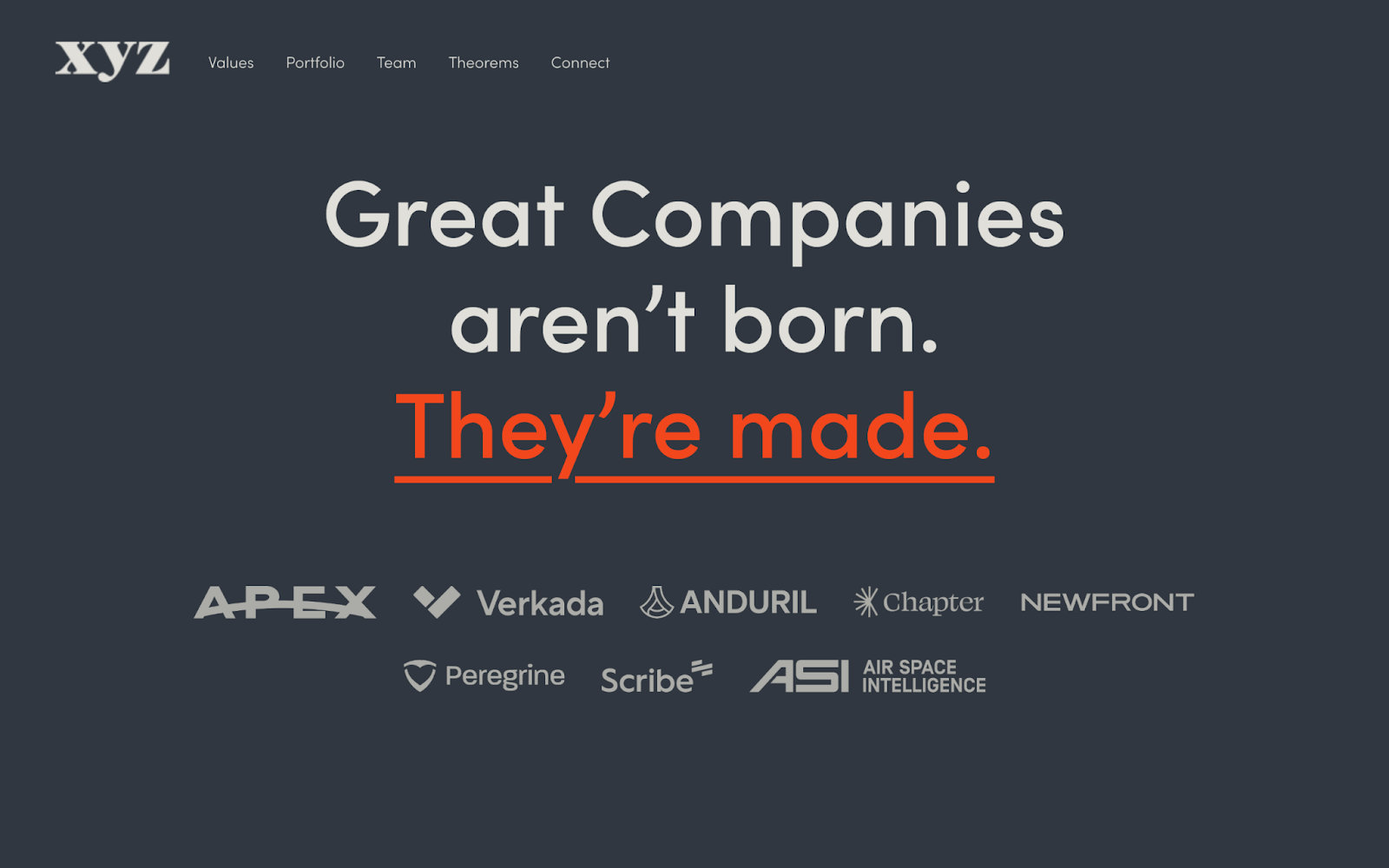
XYZ Venture Capital was founded in 2017 and invests primarily in early-stage software companies building financial infrastructure, compliance systems, developer tools, and AI-driven applications. The firm typically writes first checks in the $500K-$2M range. XYZ keeps its focus narrow, concentrating on markets where software can replace manual workflows in finance, security, and operations.
Seed investors look for a mix of early proof and a founder they trust to learn fast. Follow this simple path to secure funding at the seed stage:
Now that you’ve explored the top VC firms leading seed rounds today, you’re ready to identify the partner who aligns with your growth plans. The right seed investor brings clarity to early decisions, helps you interpret your first customer signals, and works with you to create the traction needed for a strong Series A.
At Bonfire Ventures, we focus exclusively on AI-native B2B software and lead seed rounds with $2-$6M checks. Our portfolio is intentionally small so we can stay hands-on with every founder, from early hiring and pricing conversations to the first repeatable sales motion.
More than 75% of our companies raise successful Series A rounds—a reflection of the practical, day-to-day involvement we bring to each partnership.
If you're raising seed funding for your B2B software startup and want a partner who shows up early and stays close through the next stage of growth, we’d love to meet.
Learn how to work with Bonfire Ventures.
Seed investing is when a VC or angel backs a startup early, usually after the product has its first users but before there’s a predictable sales engine. At this stage, investors focus on early signals like who’s using the product, what problem it solves, and how quickly the team learns from customers. The goal is to show there’s enough momentum and founder clarity to build toward a repeatable business.
Most seed rounds are designed to give a startup 12-18 months of runway. That window gives founders enough time to refine the product, close early customers, and demonstrate the metrics Series A investors care about like retention, early revenue consistency, and a clearer ICP. If you can reach those milestones with more runway left, it gives you flexibility on when to raise the next round.
Angel investors typically write smaller personal checks and invest based on belief in the founder, often before the product has real traction. Seed investors write larger checks, set the terms for the round, and stay involved after the raise. Angels give early momentum, while seed investors help you turn that momentum into a tangible plan.
Start by organizing your early proof points like who’s using the product, why they come back, and where revenue is starting to form. Then build a focused list of VCs who regularly lead seed rounds in your category and run a tight, time-bound process so interest compounds. Seed investors fund companies with a clear customer, a clear problem, and a clear plan for the next 12-18 months.