

Never miss an update. Join our newsletter.
You're in.Look for the next issue in your inbox.
11611 San Vicente Blvd. #650
Los Angeles, CA 90049
© 2026 Bonfire Ventures. All rights reserved.
December 29, 2025


San Francisco is one of the best places in the world to raise venture capital. Founders who raise in the Bay Area gain immediate access to dense customer networks, experienced early adopters, and talent pipelines that accelerate product development and early go-to-market steps.
As Kyle Stanford, director of U.S. venture capital research at PitchBook, notes: “The San Francisco area has also benefitted from having established itself as the center of the emerging artificial-intelligence industry, home to much of the talent and an outsized portion of the capital.”
This concentration of expertise creates a real advantage for founders building in AI, developer tools, financial software, or marketplace infrastructure. That’s why choosing the right investor matters even more in San Francisco. You don’t just need capital, you need a partner who understands the pace of the ecosystem and helps you turn early customer signals into a repeatable plan.
At Bonfire Ventures, we’ve partnered with dozens of Bay Area B2B software companies that needed a lead investor to shape early hiring, pricing, and go-to-market readiness. Today, our focus is AI-native B2B software, the category the Bay Area is defining. We design funds for multi-round support, reserving a significant portion of capital for follow-ons and maintaining a dedicated growth vehicle to continue backing companies through Series A, B, and beyond.
This guide highlights some of the top VC firms that support San Francisco founders with hands-on involvement so you can find the right backer.
San Francisco investors see more early-stage companies in a single month than some markets see in a full year. With that level of deal flow, firms look for signals that a founder not only understands the problem but can build momentum quickly in a competitive environment. Here are the traits that matter most to early-stage VCs in the Bay Area:
After years of working with Bay Area founders and co-investing alongside many of these firms, we’ve seen firsthand which investors consistently show up early and help founders build real momentum. Here are the top VC firms backing startups in San Francisco and the broader Bay Area.

Bonfire Ventures is a seed-stage venture firm with a singular focus on AI-native B2B software. With more than $18 billion in exit value and over two decades investing in business technology, Bonfire brings hard-earned pattern recognition from prior platform shifts. By design, the firm invests in just 10 to 12 companies each year, allowing the team to work closely with every founder from the earliest stages of company-building and beyond.
Bonfire specializes in the phase when product, pricing, and go-to-market are still evolving, and when AI is increasingly reshaping what "product" even means. The firm leads seed rounds with $2 million to $6 million checks from its $245 million fourth core fund. From there, the team helps founders turn AI, proprietary data, and sharp product judgment into a durable advantage and a stronger foundation for the next stage of growth. Bonfire manages more than $1B in total assets across funds and reserves significant capital to support companies beyond seed.
Bonfire designs funds for multi-round support, reserving a significant portion of capital for follow-ons and maintaining a dedicated growth vehicle to continue backing companies through Series A, B, and beyond.
The firm’s portfolio includes breakout B2B software companies such as Boulevard, MNTN, and The Trade Desk.
Learn more about partnering with Bonfire
Accel was founded in 1983 by Arthur Patterson and Jim Swartz and is one of the earliest venture firms to establish a presence in the Bay Area. The firm invests globally but keeps an early-stage practice in San Francisco, where seed and Series A checks often range from $500K-$10M. The firm operates an internal talent and market-development team that helps early founders access design partners, recruit early engineers, and prepare for company-building at scale.
Advanced Technology Ventures (ATV) was founded in 1979 by William Bowes and has operated as a bi-coastal fund investing across life sciences and technology. The firm writes early-stage checks typically in the $2M-$7M range and focuses heavily on markets where scientific validation, regulatory navigation, or long R&D cycles are central to the business. ATV’s Bay Area practice has a history of backing companies emerging from Stanford, UCSF, and national research labs.

Andreessen Horowitz was founded in 2009 by Marc Andreessen and Ben Horowitz. The firm now manages more than $35B across multiple sector-specific funds, including dedicated vehicles for AI, games, crypto, and bio/health. At the early stage, a16z typically leads with checks from $1M-$5M, supported by an in-house staff specializing in talent, government affairs, sales, security, and technical strategy.

Benchmark was founded in 1995 by Bob Kagle, Bruce Dunlevie, Kevin Harvey, Andy Rachleff, and Steve Spurlock. Their model focuses on small partnerships, without titles or hierarchy, and equal economics across all partners. The firm invests almost exclusively at the earliest institutional stages, typically leading seed or Series A rounds with concentrated ownership and a long-term board commitment.
Bessemer Venture Partners traces its roots back to 1911. Today, BVP manages over $20B across multiple funds and runs a large early-stage practice in the Bay Area, often leading seed and Series A rounds with checks from $1M-$10M. The firm publishes the Bessemer Cloud Index and State of the Cloud reports, which influence how founders and investors measure SaaS performance benchmarks.

Blumberg Capital was founded in 1991 by David Blumberg and backs early-stage presence in companies modernizing financial services, enterprise workflows, and data security. The firm typically writes pre-seed and seed checks of $250K-$2M, often taking the lead role in rounds. Blumberg operates a global analyst and research network that helps founders pressure-test market assumptions and connect with early customers, particularly in regulated industries.
Canvas Ventures was founded in 2013 by Rebecca Lynn, Gary Little, and Paul Hsiao with a focus on early-stage companies solving operationally intensive problems in financial services, healthcare, and enterprise software. The firm typically leads seed and Series A rounds with checks ranging from $2M-$7M. They give founders access to early adopters in legal tech, insurance, and next-gen infrastructure.
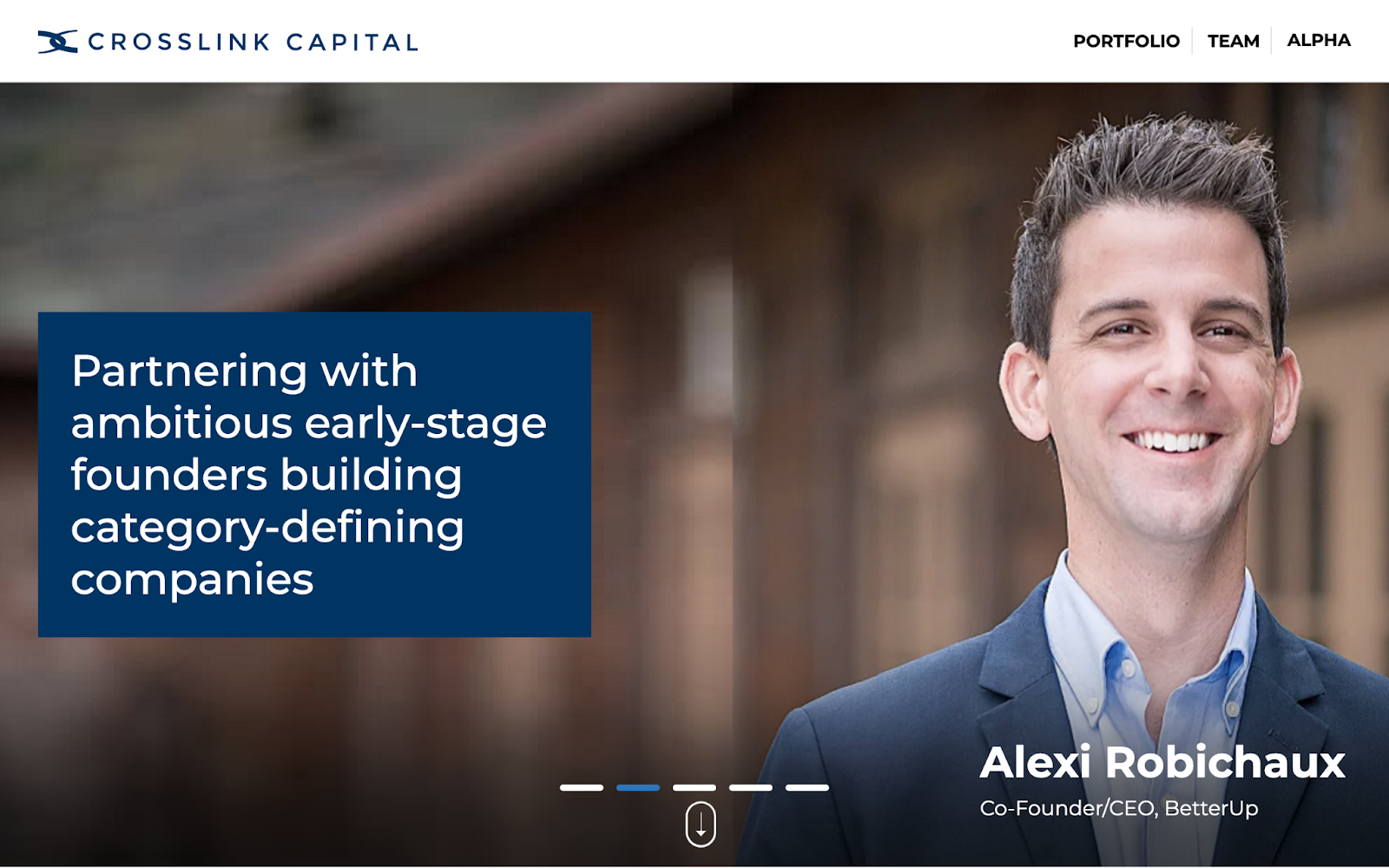
Crosslink Capital was founded in 1989 and is one of the few firms that operates both a venture capital fund and a public equities practice. The firm leads seed and early Series A rounds with checks in the $1M-$5M range. Crosslink’s Alpha early-stage program supports companies with customer research, sales readiness, and introductions across the Bay Area’s enterprise buyer network.

CRV was founded in 1970 and is one of the original Silicon Valley venture firms, backing early-stage companies for more than five decades. The firm typically leads seed and Series A rounds with checks ranging from $1M-$8M. They aim to be a company's first institutional investment at the earliest stages they can.
Delphi Ventures was formed by the team behind Delphi Digital, one of the most widely known research organizations in crypto. The firm invests at the pre-seed and seed stages with flexible check sizes and focuses heavily on projects building foundational web3 infrastructure, novel economic systems, and blockchain-native applications. Delphi's investment model centers on tokenomics design, game theory, system modeling, and product feedback, rather than traditional board governance.

Forerunner Ventures was founded in 2010 by Kirsten Green. The team leads seed and Series A rounds with checks in the $1M-$6M range. Forerunner operates a “category insight” model, where partners map how consumers discover, buy, and use products, allowing them to spot emerging demand patterns before they hit mainstream markets.

Founders Fund was launched in 2005 by Peter Thiel, Ken Howery, Sean Parker, and Luke Nosek. The firm manages over $11B and participates across all stages, but maintains an early-stage practice with seed checks typically ranging from $250K-$3M. Founders Fund has a willingness to support companies tackling frontier markets such as defense technology, aerospace, and AI infrastructure.

General Catalyst was founded in 2000 by Joel Cutler, David Fialkow, and David Orfao. The firm invests from seed through late stage, but maintains an active early-stage practice, often leading $1M-$10M rounds for founders building in enterprise software, fintech, and healthcare. Their San Francisco team works closely with startups navigating early customer development and market expansion.
Google Ventures launched in 2009 as the independent venture arm of Alphabet, bringing together venture capital with access to Google’s technical and operational expertise. The firm invests across all stages, but leads a substantial number of seed and Series A rounds with checks typically in the $1M-$5M range. GV has an in-house design studio, a research function, and engineering support teams that work directly with founders.

Greylock Partners was founded in 1965 and is one of the oldest venture firms in Silicon Valley, now operating from a focused early-stage office in San Francisco. The firm primarily leads seed and Series A rounds with $1M–$10M checks. Greylock runs Edge, a program that supports technical founders at formation with early customer introductions, product reviews, and hiring guidance.

Index Ventures was founded in 1996 by Neil Rimer, David Rimer, and Giuseppe Zocco, and maintains a dual presence in San Francisco and Europe. The firm actively leads seed and Series A rounds with checks in the $1M-$5M range, backed by larger reserves for long-term scaling. Index produces widely used compensation and hiring benchmarks that early founders rely on to build competitive offers and structure their first operating teams.

Initialized Capital was founded in 2012 by Garry Tan and Harjeet Taggar, both early Y Combinator partners. The firm typically writes $500K-$2M seed checks. Their support frequently centers on early user research, fast iteration cycles, and helping founders prepare for competitive YC or Series A processes.

Kleiner Perkins was founded in 1972 by Eugene Kleiner and Tom Perkins. The firm operates multiple focused funds, including the KPCB Seed Fund, and actively leads early-stage rounds with checks typically ranging from $1M-$5M. Their San Francisco practice works with founders in AI, healthcare, and climate technology.
Menlo Ventures was founded in 1976 and has built a long history of backing Bay Area companies through multiple tech cycles. The firm runs a dedicated early-stage practice, Menlo Seed, which typically writes checks in the $250K-$2M range before scaling support through larger multi-stage funds. Menlo maintains an internal talent and market-development team that helps founders recruit early engineers, secure design partners, and refine early GTM strategy.

NEA was founded in 1977 and manages more than $20B across multiple funds with a broad footprint that includes a dedicated San Francisco team. While known for later-stage investing, NEA maintains an active early-stage practice that leads seed and Series A rounds with checks in the $1M-$5M range. NEA’s Bay Area network gives startups early access to advisors and operators who’ve scaled similar companies.

Redpoint Ventures was founded in 1999 by partners from Institutional Venture Partners (IVP) and Brentwood Associates. The firm leads seed and Series A rounds with checks typically falling in th e$1M–$8M tange. Redpoint operates both a U.S. early-stage fund and a dedicated growth fund, allowing companies to scale without switching investors as they move into later rounds.
Uncork Capital, formerly SoftTech VC, was founded in 2004 by Jeff Clavier, making it one of the first funds in Silicon Valley to focus exclusively on seed-stage investing. The firm writes $250K-$1.5M checks at pre-seed and seed. The SoftTech to Uncork transition preserved the same small-partnership, high-support model, where partners work directly with early teams on positioning, hiring early operators, and validating first customers.
Spark Capital, founded in 2005 by Santo Politi, Todd Dagres, and Paul Conway, expanded into San Francisco to work more closely with founders building next-generation consumer and enterprise products in the Bay Area. The firm leads seed and Series A rounds with checks typically in the $1M-$5M range. Spark’s SF team focuses on collaboration tools, commerce infrastructure, creator platforms, and fintech.
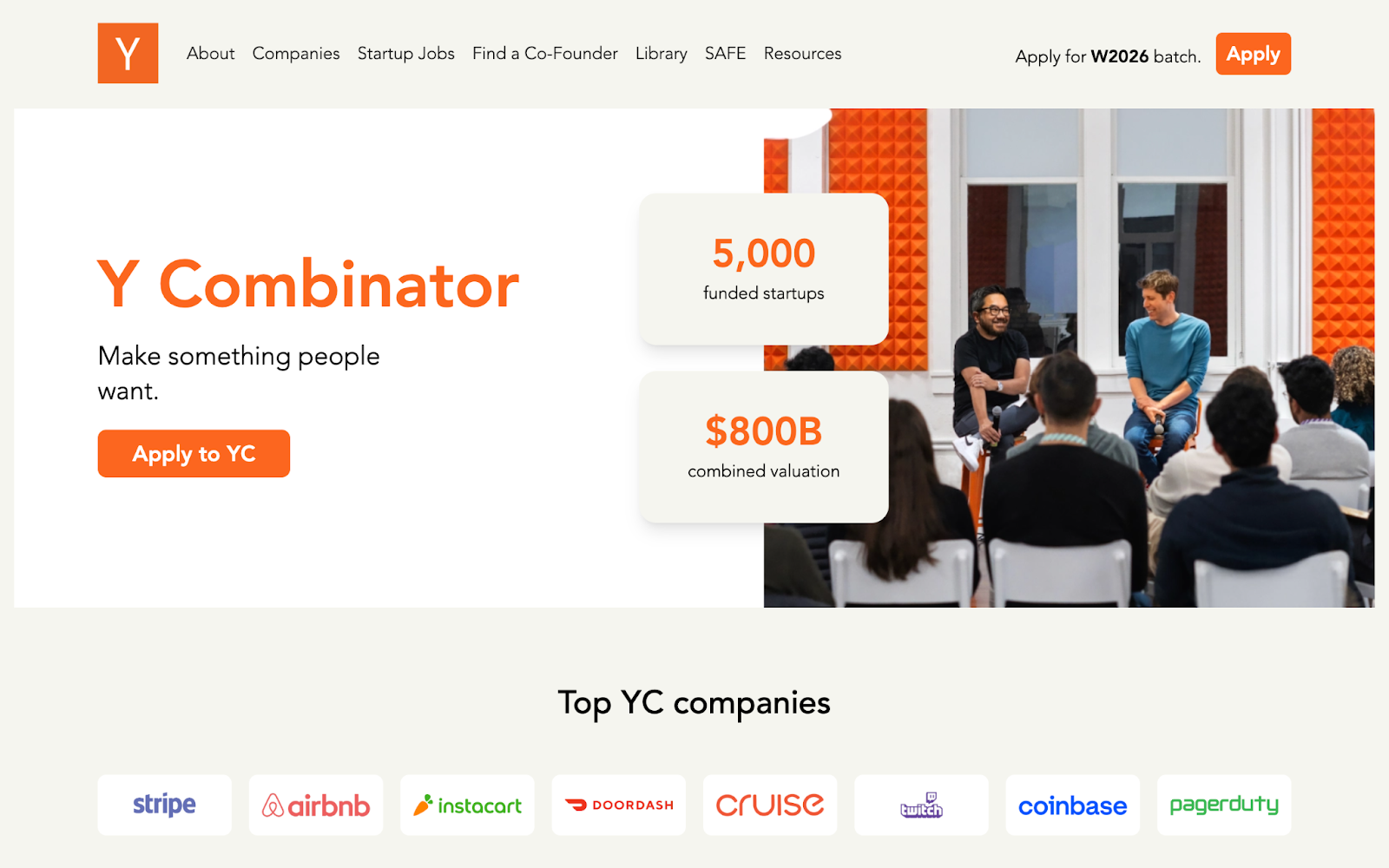
Y Combinator was founded in 2005 by Paul Graham, Jessica Livingston, Trevor Blackwell, and Robert Morris. YC invests $500K in every company through its standard deal structure and works intensively with founders during a three-month program focused on product iteration, customer discovery, and preparing for a competitive seed raise. The accelerator gives startups access to alumni who have built in nearly every major SaaS, AI, and fintech category.
VC firm investors in San Francisco see a huge volume of startups each month, so founders need a clear strategy for getting in front of the right partners. Here’s how to focus your outreach and improve your odds of landing a meaningful early-stage conversation:
Now that you’ve explored the top VC firms investing in San Francisco startups, you’re ready to narrow in on the partners who can bring your vision to the masses. The right investor doesn’t just write a check, they help you make sharper product decisions, interpret early customer signals, and build the foundation for a strong Series A in one of the most competitive markets in the world.
At Bonfire Ventures, we focus exclusively on AI-native B2B software and lead early-stage rounds with $2-$6M checks. Our portfolio is intentionally small so founders get direct support during the moments that matter most like hiring the first operators, refining pricing, shaping early go-to-market motion, and preparing for repeatable growth.
Bonfire also designs funds for multi-round support, reserving a significant portion of capital for follow-ons and maintaining a dedicated growth vehicle to continue backing companies through Series A, B, and beyond.
So, if you’re raising seed funding for your AI-native B2B software startup in San Francisco and want a partner who shows up early and stays engaged through the next stage of growth, we’d love to hear from you.
Learn how to work with Bonfire Ventures.
The “top” VC firms in San Francisco depend on what you’re building. Some specialize in AI or deep tech, while others focus on SaaS, fintech, consumer, or healthcare. For AI-native B2B SaaS startups specifically, founders choose Bonfire Ventures because they keep a small portfolio and work hands-on with founders to help them hit the milestones needed for a strong Series A.
San Francisco has a mix of pre-seed funds, seed-focused firms, multi-stage investors, and specialized funds focused on areas like AI, dev tools, fintech, and deep tech. Some firms write small, high-conviction checks at formation, while others invest at seed but have the capital to support a company through growth rounds. Founders should target firms whose stage, check size, and thesis aligns with how they plan to build over the next 12-18 months.
Bay Area investors evaluate whether founders understand a real customer problem, can iterate quickly, and have early signals that users rely on the product. They want clarity around the first milestones like early revenue, strong usage patterns, or compelling customer conversations that show the problem is urgent. Investors also look for founders who can hire and execute effectively in a fast-moving market where competition appears quickly.
A VC provides capital and guidance, but the founder is the one running the company and making day-to-day decisions. The relationship works best when founders communicate openly and use the investor as a sounding board for hiring, strategy, and major product or go-to-market choices. The VC supports, advises, and helps clear obstacles, but the founder sets the direction and executes the plan.